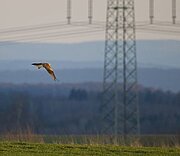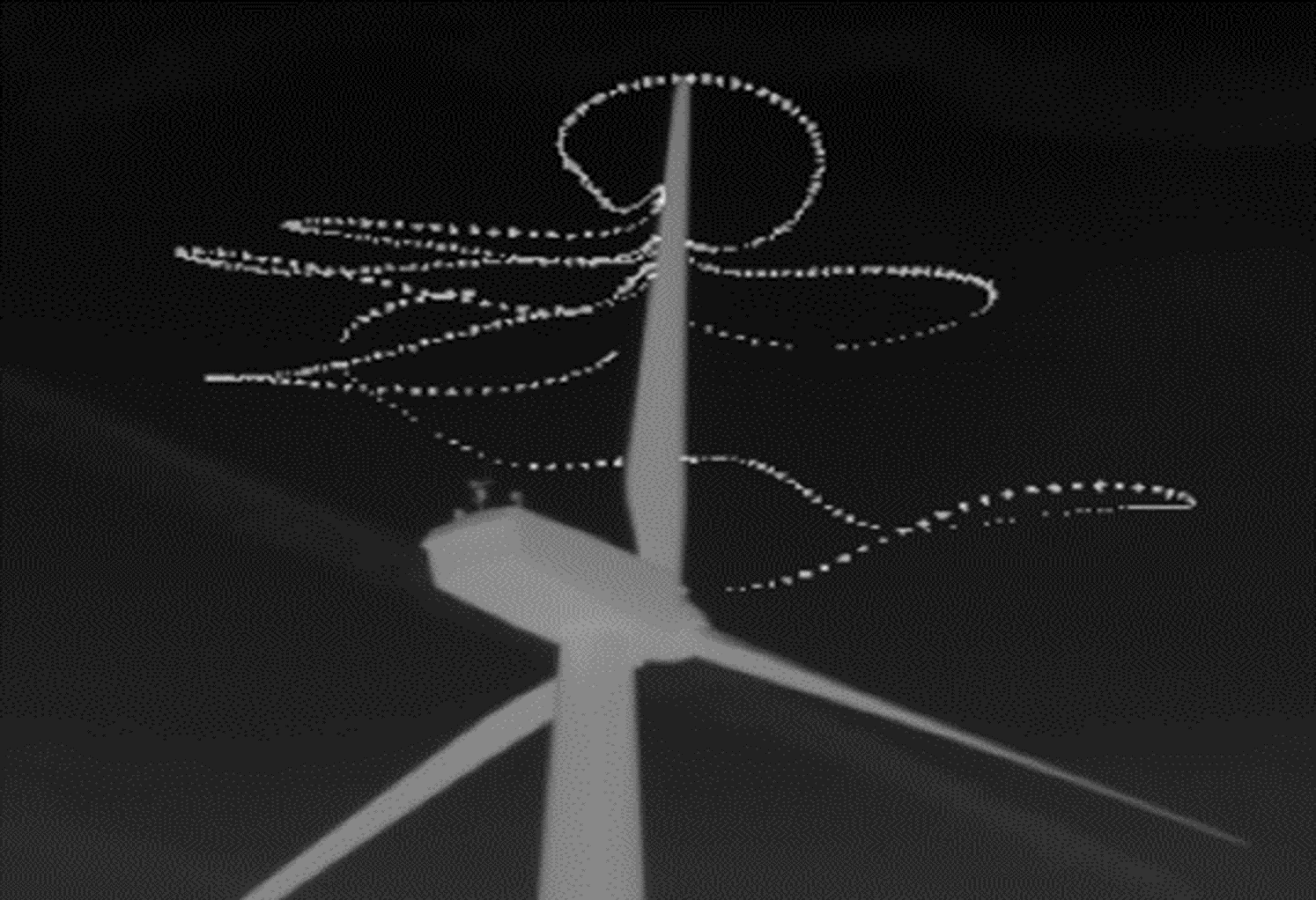
Nature conservation research at the southern German wind energy test site aims to develop and test avoidance measures for birds and bats at wind turbines. It is thus intended to make an important contribution to the research and development of technical systems on wind turbines (WT) with the aim of avoiding conflicts with wind energy-sensitive species. Existing knowledge gaps regarding the behaviour and collision risk of birds and bats at wind turbines and the requirements for and effectiveness of technical avoidance systems are to be closed.
Research question / Project objectives
This project, which continues nature conservation research at the South German onshore wind energy test field (‘NatForWINSENT-III’), aims to gain a better understanding of the occurrence and behaviour of bats and birds at wind turbines and, based on this, to optimise existing avoidance measures and, in particular, to develop and test innovative technical avoidance measures. To this end, technical systems for recording and identifying species and their behaviour have been developed in the previous phases (NatForWINSENT-II) and will continue to be used. Using these and already established techniques, extensive data on birds (especially red kites), bats and insects is being collected and combined with various meteorological data from the test field in order to determine weather dependencies of behaviour.
Procedure
Sensor-based detection of birds (radar, and in particular red kites using telemetry and LRF) and bats (acoustics, thermal imaging technology) is being continued at research wind turbines that are now in operation. In doing so, we are increasingly relying on automated evaluations, in particular of the innovative detection techniques developed, such as stereo thermal imaging of bat flight paths and the detection of insect abundance using camera traps. The evaluation of camera-based collision victim detection is also being further developed. The data is also collected during different operating modes of the wind turbines in order to draw conclusions, e.g. on the danger to birds and bats at different rotor speeds.
The data collected and evaluations thus also specify and improve the requirements for technical avoidance measures such as shutdown algorithms and anti-collision systems. The latter will continue to be tested for performance as part of the project.
The result should be a substantial gain in knowledge about the behaviour of birds and bats at wind turbines, from which practical recommendations for the implementation and design of technical avoidance measures at wind turbines, in particular, can be derived.
- Project coordination / communication / operational management / data management
- Birds – general and individual flight movements
- Bats – acoustic detection
- Stereo thermal imaging of bats; collision victim detection
- Insect detection
Procect coordination
Center for Solar Energy and Hydrogen Research Baden-Württemberg (ZSW)
Energy economy systems analysis
Meitnerstr. 1, D-70563 Stuttgart
Dr Frank Musiol
Tel. 07049 11/7870-217
Frank.Musiol@zsw-bw.de
Project partners
Swiss Ornithological Institute
Seerose 1, CH- 6204 Sempach
Freiburger Institut für Angewandte Tierökologie GmbH (FrInaT)
Dunantstr. 9, D-79110 Freiburg
UMIT, Institut für Mess- und Sensortechnik
Eduard-Wallnöfer-Zentrum 1, A-6060 Hall in Tirol
OekoFor GbR
Kartäuserstr. 39a, D-79102 Freiburg
Fachbüro für ökologische Planungen
Schubartstr. 12, D-73092 Heiningen
Funding
Federal Agency for Nature Conservation (BfN)
Leipzig office
Alte Messe 6, D-04013 Leipzig
Jens Ponitka
Tel: 0049 341/30977-169
jens.ponitka@bfn.de
Topics
Wind energy and birdsKeywords
Related News
Monitoring reports and field surveys sought for an ongoing expert assessment of birds, bats, sand lizards and field hamsters

November 7, 2024, 10:00 a.m.–4:00 p.m., Tagungszentrum im Haus der Bundespressekonferenz, Berlin

6 November 2024, 3.00–5.30 pm, Conference Centre at the Federal Press Conference Building, Berlin & online via livestream

Related Projects
FKZ 3517861600 FKZ3517861600 NatForWINSENT I – Nature conservation at the wind test site
The wind energy test site of the wind energy research cluster South (WindForS) planned for the Swabian Jura is intended to serve supporting research for nature conservation. The main aim is to develop…

FKZ 3516822700 FKZ3516822700 Effectiveness of mitigation measures
There is a wide range of current measures used to minimise the adverse effects of wind turbines on birds. These include regulating the operation of the turbine, preventing birds being attracted to it…

FKZ 3515860800 FKZ3515860800 Bats and wind energy in woodland II
The object of this research project is to establish whether and to what extent wind turbines at forest sites have a negative effect on bats, disturb them or even threaten them to a significant degree.…

FKZ 3515830200 FKZ3515830200 Species conservation and small wind turbines
This project records baseline data on a larger scale for the first time in order to evaluate the effects of small wind turbines on birds and bats. The study also analyses the relevant determining…
FKZ 3516830700 FKZ3516830700 Effectiveness of bird flight diverters
Bird flight diverters are used throughout the world to reduce collisions by birds at overhead power lines and the additional mortality associated with this. Their effectiveness is determined by…